Christmas Otter Embroidery Design
A Playful, Premium Holiday Motif for Boutique Apparel
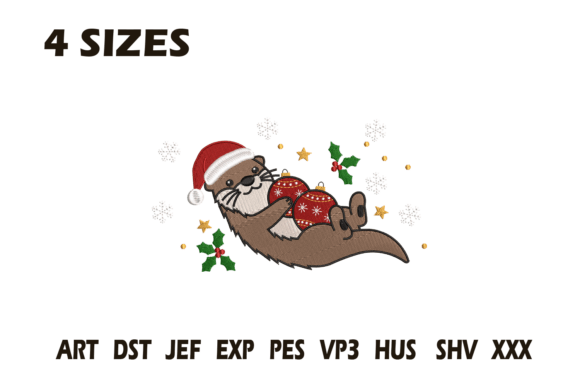
As an embroidery designer who’s developed collections for small clothing brands and Etsy sellers for over a decade, I opened the Christmas Otter Embroidery Design with immediate curiosity—not just for its seasonal charm, but for how it balances whimsy with wearability. The first impression? A warm, hand-drawn personality—rounded shapes, expressive eyes, and subtle texture in the fur that suggests thoughtful digitizing. It feels playful without tipping into juvenile, festive without relying on clichés like candy canes or snowflakes, and premium thanks to balanced stitch density and clean underlay. This isn’t a flat clipart transfer—it’s a machine embroidery design built for fabric, not just screens.
How It Performs Across Real Apparel Projects
I tested the Christmas Otter Embroidery Design across several garment types common in boutique workflows: neutral heather sweatshirts, oatmeal hoodies, charcoal denim jackets, soft pastel t-shirts, and heavyweight canvas tote bags. On a relaxed-fit crewneck sweatshirt, placed at standard chest position (3.5" wide), the otter held crisp detail—even in the whiskers and scarf folds—without excessive bulk. Its scale is generous enough to read clearly at arm’s length, yet compact enough to avoid overwhelming petite silhouettes.
For sweatshirt embroidery, the design’s moderate stitch density kept fabric drape intact—no stiffening or puckering on midweight fleece. On ribbed fabric (like hoodie cuffs or waistbands), I recommend using a light cutaway stabilizer and reducing top tension slightly; the otter’s curved contours respond well when the base layer stays anchored. As a hoodie design, it shines as a subtle sleeve accent—scaled down to 2.25"—or as a bold back placement (centered below the collar) when mirrored or paired with minimalist text.
Tote bags and denim jackets benefit from its confident line work: no fine interior details get lost in texture, and the outer stitching maintains definition even on uneven surfaces. For custom apparel targeting lifestyle-focused buyers—think cozy seasonal outfits or gifting bundles—the otter adds instant visual warmth and narrative. It reads as handmade, intentional, and quietly joyful—qualities that elevate perceived value for small shop product listings.
Strategic Placement & Fabric Considerations
The Christmas Otter Embroidery Design works beautifully on dark garments—especially when stitched in cream, sage, or rust thread colors—but avoid ultra-fine metallics unless you’re testing them first. On stretchy fabrics like French terry or lightweight knits, use a tear-away + cutaway hybrid stabilizer and consider shortening jump stitches manually if your editing software allows. Curved surfaces (shoulders, pockets, curved hems) require careful hooping: baste the area first, then float the hoop gently to prevent distortion of the otter’s rounded silhouette.
While the design includes no tiny lettering or micro-details, I still advise checking the inner ear and paw pads at 200% zoom in your embroidery software. These areas hold consistent fill, but on dense fleece, slight compression can mute contrast—so verify thread color choice against your actual fabric swatch, not just the screen preview.
Impact on Brand Identity & Customer Connection
For creative entrepreneurs building a boutique brand, this design does more than decorate—it communicates tone. It signals approachability, craftsmanship, and seasonal thoughtfulness without shouting “HOLIDAY SALE.” That subtlety builds buyer trust: customers recognize quality digitizing, and they associate your label with consistency and care. In social media graphics or printable mockups, the otter stands out cleanly against neutral backdrops—making it ideal for Instagram carousels, Etsy banners, or email headers.
When used across multiple SKUs (e.g., matching sweatshirts, totes, and baby onesies), the Christmas Otter Embroidery Design becomes a quiet signature—a recognizable motif that strengthens visual consistency without requiring logos or slogans. That cohesion helps customers recall your shop between seasons and encourages repeat engagement.
Practical Designer Notes Before You Stitch
- Always test on scrap fabric that matches your final garment’s weight, texture, and stretch—especially for sweatshirt embroidery or hoodie design runs.
- Confirm your hoop size compatibility before digitizing adjustments; some versions may include multiple sizes—check the Creative Fabrica embroidery listing details.
- Review stabilizer pairing: medium-weight cutaway for stable knits, lightweight tear-away for woven cotton, and fused + cutaway for fleece or terry.
- Compare placement options digitally first—chest, sleeve, back, or pocket—and simulate how each reads in lifestyle photos.
- Inspect stitch density in high-fill zones (like the otter’s body) against your machine’s max speed and your fabric’s tolerance for heat buildup.
- Verify licensing terms directly on the Creative Fabrica embroidery page before producing commercial embroidery products—you’ll need clarity on resale rights for finished apparel.
- Match thread colors to your brand palette early: the otter’s friendly expression lifts with warm neutrals but gains modern contrast in deep navy or forest green.
Final Thought: A Thoughtful Addition to Your Holiday Lineup
The Christmas Otter Embroidery Design won’t replace classic motifs—but it refreshes them. It’s the kind of digital embroidery file that makes customers pause mid-scroll, smile, and imagine wearing it with coffee and socks on a snowy morning. For Etsy sellers, small batch producers, and handmade product studios, it offers professional polish without complexity. And because it’s rooted in character—not just calendar dates—it holds relevance beyond December. Whether you’re launching a limited holiday collection or building a year-round identity around cozy authenticity, this otter earns its place in your design library. Just remember: let it breathe on fabric, honor its texture with smart stabilizing, and always stitch with intention.