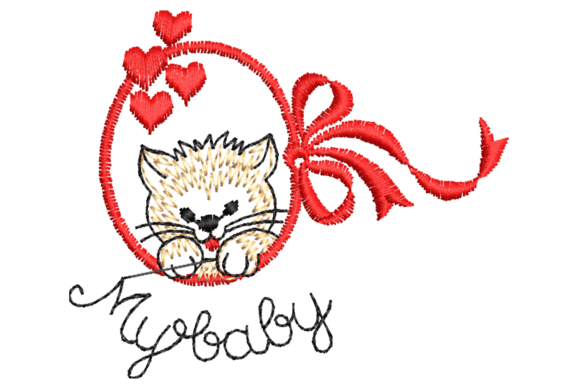
Cute Little Kitten Embroidery Design
A Warm, Handmade Vibe That Builds Brand Connection
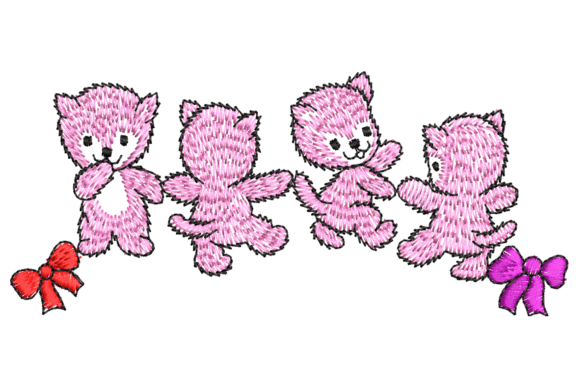
As an embroidery designer who’s developed hundreds of commercial designs for small businesses—from indie bakeries to pet-friendly boutiques—I immediately recognize the quiet power of Cute Little Kitten Embroidery Design. Its first impression isn’t flashy or loud; it’s tender, approachable, and intentionally soft. The description—“a tiny kitten with a soft, innocent expression that instantly melts the heart”—is spot-on. This isn’t a bold mascot or a stylized logo. It’s a feeling: cozy, gentle, handmade. That makes it ideal for brands rooted in care, creativity, or community—think florists wrapping bouquets in linen sacks, craft studios selling hand-dyed yarns, or cat cafés embroidering staff aprons with quiet charm.
Where Cute Little Kitten Embroidery Design Shines in Real Business Use
This design excels where warmth and personality matter more than scale or sharpness. As an embroidered patch, it adds instant character to tote bags, denim jackets, or product packaging—especially when stitched onto natural fabrics like canvas, cotton duck, or unbleached linen. On staff uniforms, it works beautifully as a subtle chest accent or sleeve detail: small enough to avoid overwhelming workwear, but expressive enough to spark conversation and reinforce brand identity. For cap embroidery, position it front-and-center on structured cotton twill—it reads clearly at 2.5” wide without losing its playful cartoon style.
For apron embroidery, place it just above the pocket or along the waistband edge: its gentle lines complement the functional, tactile nature of aprons without competing with utility. As a tote bag design, it pairs well with minimalist typography (e.g., “Brew & Purr Café”) or stands alone as a sweet, standalone mark. Etsy sellers and handmade brands will find it especially effective in printable mockups—its soft contours translate cleanly into digital previews, helping buyers visualize how their merch feels before production.
Use With Care: Practical Limits for Commercial Embroidery
While Cute Little Kitten Embroidery Design brings undeniable appeal, it’s not universally scalable. Its strength lies in its simplicity—but that also means caution is needed in certain applications. Avoid using it smaller than 1.75” as a standalone embroidered patch; delicate features like whiskers or ear contours may blur or disappear entirely on curved surfaces like cap fronts or tapered tote handles. High stitch density could compromise its airy, hand-drawn quality—so always verify the digital embroidery file doesn’t overfill interior areas or crowd fine outlines.
Dark uniforms demand thoughtful thread colors: test ivory, heather gray, or pale peach against navy or charcoal—avoid stark white if the fabric texture is heavy or napped. On textured fabrics like terry cloth, fleece, or thick denim, use cutaway stabilizer and reduce top tension slightly to preserve the kitten’s soft expression. And because this is an Animals-category Embroidery design built for emotional resonance—not technical precision—don’t force it into rigid branding systems that prioritize geometric consistency over organic charm.
How It Shapes Brand Identity and Customer Trust
Small business owners often underestimate how much a single machine embroidery design influences perception. Cute Little Kitten Embroidery Design signals approachability, attention to detail, and human-centered values. When customers see it on a barista’s apron or a boutique’s reusable bag, they don’t just register a logo—they register warmth. That builds trust faster than polished graphics ever could. It supports visual consistency across custom apparel, product packaging accents, and event merch without demanding uniformity: a slightly varied stitch placement or thread sheen across batches reinforces its handmade authenticity rather than undermining professionalism.
For Etsy sellers and craft businesses, this design helps differentiate from mass-produced competitors. Paired with natural fibers and earthy tones, it elevates perceived product value—not through luxury cues, but through sincerity. Buyers engage more deeply with brands that feel intentional and kind. And because it avoids cliché (no bowties, no exaggerated grins), it stays fresh across seasons and customer demographics.
Essential Embroidery Designer Notes Before Production
- Test in black and white first—confirm readability and balance without color distraction.
- Check minimum viable size—run a 1.75” and 2” version on your embroidery software to assess clarity of key features (eyes, ears, outline flow).
- Review thread color contrast—especially for dark or textured fabrics. Prioritize matte, low-sheen threads to honor its cozy, non-glossy personality.
- Inspect spacing and underlay—gentle curves need smooth underlay transitions to avoid puckering on stretchy or lightweight fabrics.
- Confirm hoop size compatibility—this design should comfortably fit standard 4” x 4” hoops, but verify before batching orders.
- Test on real fabric—not just stabilizer swatches. A 100% cotton poplin behaves differently than a poly-cotton blend under needle stress.
- Use proper stabilizer—lightweight cutaway for knits, tear-away for stable wovens, and fusible + cutaway for loose weaves like linen.
- Create a client-facing mockup—show how Cute Little Kitten Embroidery Design looks on actual garment types (e.g., apron + tote + cap) to secure approval before stitching begins.
- Compare beside other design assets—does it harmonize with your current logo, typography, or packaging palette? If not, adjust thread tones—not the design itself.
- Confirm commercial licensing—since this is intended for small business merch, commercial embroidery, and resale items, ensure your digital embroidery file includes rights for unlimited physical use across products and platforms.
Ultimately, Cute Little Kitten Embroidery Design isn’t just decoration—it’s a strategic tool for small businesses building genuine connection. When executed with intention, it transforms ordinary items into memorable touchpoints: the apron that makes customers smile, the tote that starts conversations, the cap that feels like part of the team. In a crowded marketplace, sometimes the smallest, softest details carry the most weight.