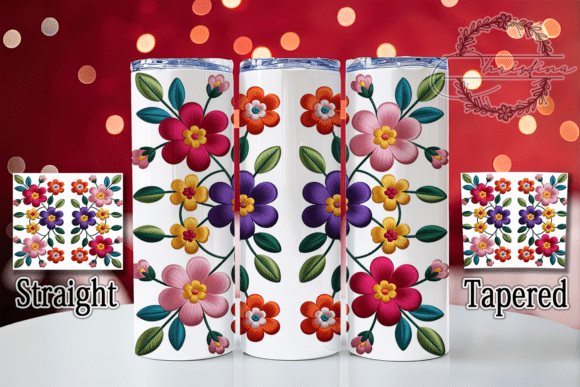
Mexican Floral Embroidery Tumbler
First Impressions: Joyful, Handcrafted, and Deeply Personal
As an embroidery designer who’s stitched over 3,000 custom orders—from baby blankets for new parents to wedding keepsakes for second-generation families—I opened the Mexican Floral Embroidery Tumbler file with quiet anticipation. What greeted me wasn’t just a graphic—it was a mood. Lush marigolds, delicate trailing vines, and subtle folk-art flourishes bloom across the layout with warmth and intention. It feels handmade without looking rustic, romantic without veering into overly ornate, and culturally rich without leaning on cliché. This isn’t “Mexican-inspired” as a trend—it’s grounded, joyful, and quietly confident. For customers seeking personalized gifts that carry meaning—not just decoration—it lands perfectly.
Why This Design Fits Real-Life Gifting Moments
The Mexican Floral Embroidery Tumbler shines brightest when translated beyond its namesake use case. Yes, it’s optimized for 20oz skinny tumblers—but its balanced scale, open negative space, and intentional line weight make it incredibly adaptable for other high-demand personalized items:
- Baby embroidery: Stitched on a cotton muslin swaddle or organic-knit onesie, it adds gentle cultural celebration—ideal for heritage-focused nurseries or bilingual families.
- Wedding gift: Embroidered onto linen pillow covers or monogrammed kitchen towels, it becomes a tactile heirloom—soft, meaningful, and quietly elegant.
- Nursery decor: When scaled down for a framed hoop art piece or stitched onto a lightweight blanket, the floral rhythm soothes rather than overwhelms.
- Etsy seller staple: As a digital embroidery file, it pairs beautifully with neutral-toned totes, aprons, and tea towels—giving small shop products instant visual cohesion and emotional resonance.
- Craft fair favorite: Printed mockups of the design on real tumbler wraps (or even embroidered towel tags) draw eyes and invite conversation—especially among shoppers who value craft integrity over mass production.
Where to Use It Thoughtfully—And Where to Pause
Like any strong machine embroidery design, the Mexican Floral Embroidery Tumbler thrives with intention—not just placement. Here’s where I recommend extra care:
- Small lettering or fine details: While the floral motifs hold up well, avoid shrinking the entire layout below 3.5" wide—petals and vine tips may lose definition in dense stitching.
- Textured fabric: On heavy terry cloth towels or nubby linen blends, use a medium-weight cutaway stabilizer and reduce stitch density slightly—this preserves clarity without puckering.
- Stretchy or delicate substrates: Skip direct application on ribbed baby bodysuits or jersey knit totes unless you’ve tested with basting spray + tear-away stabilizer first.
- Curved surfaces & dark fabric: Though designed for tumblers, remember: curved application requires precise hooping and often a flexible hoop or adhesive stabilizer. On black or navy fabric, verify thread color contrast—some golds or pale yellows fade visually without testing.
- Frequent-wash items: For embroidered towels or aprons meant for daily use, reinforce backstitching at key junctions and choose high-retention polyester threads.
How It Elevates Perceived Value—and Why That Matters
In my experience, the Mexican Floral Embroidery Tumbler doesn’t just decorate—it deepens connection. Customers don’t buy “a floral design.” They buy the feeling of being seen: the abuela who recognizes the marigold’s significance, the newlywed couple honoring roots, the Etsy shopper choosing handmade over printed because it *feels* more sincere. That emotional resonance lifts perceived value instantly. A $28 embroidered kitchen towel becomes a $42 cherished object. A $16 tote transforms from utility to identity. And for small business owners? That trust compounds—repeat buyers return not just for the product, but for the consistency of warmth and craftsmanship your brand now represents.
Photography benefits too. The design’s natural balance and vibrant yet harmonious palette pop against clean backdrops—no heavy editing needed. On social media, it encourages engagement: “What flower is your favorite?” or “Which family tradition does this remind you of?” turns passive scrolling into storytelling.
Practical Embroidery Notes You’ll Want Before Stitching
Before adding the Mexican Floral Embroidery Tumbler to your next batch of personalized gifts, run these checks:
- Test on scrap fabric—same fiber content and weight as your final product.
- Confirm thread color contrast, especially if stitching on dark or saturated backgrounds.
- Review hoop size compatibility: Does your machine support the full layout—or will you need to split or resize?
- Assess stitch density: High-density fills look lush on stable fabrics but can stiffen lightweight linens—consider lightening fill stitches by 10–15% if needed.
- Choose stabilizer intentionally: Cutaway for stretchy or unstable fabrics; tear-away for stable cottons and linens; water-soluble for delicate sheer layers.
- Compare light/dark fabric mockups side-by-side—even subtle shifts in tone affect emotional read.
- Inspect small details post-stitch: Are vine ends crisp? Do petal edges lift cleanly? Trim stray threads before packaging.
- Verify commercial licensing before selling finished products—this listing is a digital download, so confirm usage rights directly with the creator if reselling embroidered goods.
A Design That Grows With Your Business
The Mexican Floral Embroidery Tumbler isn’t just another graphics file—it’s a versatile, emotionally intelligent tool for makers who understand that personalization isn’t about slapping a name on something. It’s about honoring story, celebrating culture, and delivering handmade quality with quiet confidence. Whether you’re an Etsy seller launching your first curated collection, a gift shop owner building local loyalty, or a wedding designer crafting heirlooms, this embroidery file invites authenticity—not just aesthetics. And in today’s market, that’s the kind of detail customers remember, share, and come back for.