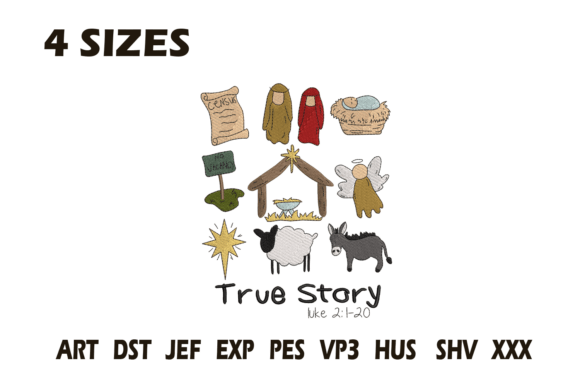
True Story Nativity Scene Embroidery
A Playful, Brand-Ready Christmas Design for Small Business Merch
As an embroidery designer who’s developed and tested hundreds of machine embroidery designs for small businesses—from neighborhood bakeries to indie florists and handmade Etsy studios—I approached True Story Nativity Scene Embroidery with both curiosity and commercial intent. The title alone hints at narrative warmth, and the description—“Bring a bit of charm to your fabrics with this playful embroidery design”—immediately signals its personality: friendly, approachable, and intentionally whimsical. That’s not just decorative flair—it’s strategic brand language. For a café launching holiday mugs and staff aprons, or a boutique curating limited-edition gift totes, this isn’t just a nativity scene. It’s a tone-setter.
First Impression: Whimsy With Intention
The phrase “True Story” adds sincerity and storytelling weight, while “Nativity Scene” grounds it in tradition—and “playful” (as called out in the description) is the key differentiator. This isn’t a formal, gold-thread cathedral motif. It’s likely simplified, gently stylized, with open shapes and breathing room—ideal for small business merch where clarity and charm matter more than ornate detail. That playfulness translates directly into brand identity: think warm, human-centered, and confidently handmade—not mass-produced or overly reverent. It feels premium because it’s intentional, not because it’s dense or flashy.
Where It Shines in Real Business Use
True Story Nativity Scene Embroidery excels where small businesses need memorable, cohesive, and scalable branding—especially during the high-intent holiday season:
- Embroidered patches: Perfect as sew-on or iron-on accents on tote bags, denim jackets, or product packaging. Its balanced composition holds up well when cut to 2.5"–3.5" diameters—ideal for boutique merchandise or customer thank-you gifts.
- Apron embroidery: Center-chest placement reads clearly without overwhelming the garment. The “playful” quality makes staff feel connected to the brand story—especially for cafés, bakeries, or craft studios hosting holiday workshops.
- Cap embroidery: Works best on structured front panels (not curved bill sides). Its likely open outlines and moderate stitch density prevent puckering on cotton twill or performance blends.
- Tote bag design: A standout on natural canvas or unbleached cotton—enhancing the handmade product aesthetic while reinforcing seasonal messaging without cliché.
- Custom apparel & uniforms: When stitched on left-chest areas of crewneck tees or flannel shirts, it communicates community, care, and local character—key trust signals for small business customers.
- Product labels & packaging: As a subtle embroidered tag on gift boxes, linen wraps, or ceramic mug sleeves, it elevates perceived value and supports visual consistency across touchpoints.
Where to Use It Thoughtfully
Even strong designs have practical limits. With True Story Nativity Scene Embroidery, keep these considerations top of mind:
- Small patch sizes: Below 2": fine details (like tiny star highlights or facial features) may collapse. Always test at target size before bulk production.
- Cap fronts & curved surfaces: Avoid tight curves unless the design has been digitized with stretch compensation. Review the embroidery file for smooth vector flow—not jagged edges.
- Textured fabric: On terry cloth towels or heavy home decor linen, higher stitch density can cause distortion. Pair with appropriate cutaway stabilizer and reduce density if needed.
- Dark uniforms or frequent-wash items: Confirm thread color contrast—light cream or soft gold may not read on navy or charcoal without a white underlay. Test thread colors on actual fabric swatches.
- High stitch density: If the design packs too many fills into small zones, it risks stiffness and wear fatigue. Look for smart spacing and breathable negative space—especially around figures and halos.
How It Strengthens Brand Identity & Customer Trust
For small businesses, every embroidered element is a silent ambassador. True Story Nativity Scene Embroidery builds recognition not through repetition alone—but through emotional resonance. Its “playful” voice signals authenticity, which strengthens customer trust far more than generic snowflakes or bells. When used consistently across aprons, totes, and staff caps, it creates visual continuity that says, “This is who we are—not just what we sell.” That cohesion increases perceived professionalism, even for micro-brands. And because it leans into narrative (“True Story”), it invites engagement—customers remember the story behind the stitch, not just the season.
Practical Designer Notes Before You Stitch
Before deploying True Story Nativity Scene Embroidery commercially, here’s what I always do—and recommend you do too:
- Test the embroidery file in black and white first—this reveals balance, spacing, and legibility faster than color.
- Check how it renders at your smallest intended patch size (e.g., 2" round). Resize digitally and inspect stitch paths—not just pixel previews.
- Review thread color contrast on your actual fabric. Light threads on dark backgrounds often need underlay; dark threads on light may need reduced density.
- Inspect spacing between elements—tight loops or overlapping shapes can cause thread breaks or nesting.
- Confirm hoop size compatibility with your commercial or in-house machines. Not all files scale cleanly.
- Test on real fabric with your preferred stabilizer. A cotton poplin apron behaves very differently than a polyester tote.
- Create a printable mockup for client approval—include scale, placement, and thread color swatches.
- Compare it beside your existing design assets. Does it harmonize with your logo, typography, and other holiday motifs?
- Verify commercial licensing. Since this is intended for small business merch and branded patch use, confirm the digital embroidery file permits resale, distribution, and commercial embroidery—don’t assume.
Bottom line: True Story Nativity Scene Embroidery isn’t just festive decoration. It’s a versatile, emotionally intelligent tool for building brand warmth, consistency, and connection—especially when thoughtfully integrated into your small business merch strategy. Used with intention, it turns everyday items—aprons, caps, totes—into quiet ambassadors of your story.