Butterfly Give Yourself Time Embroidery
A Whimsical Pause, Stitched Right
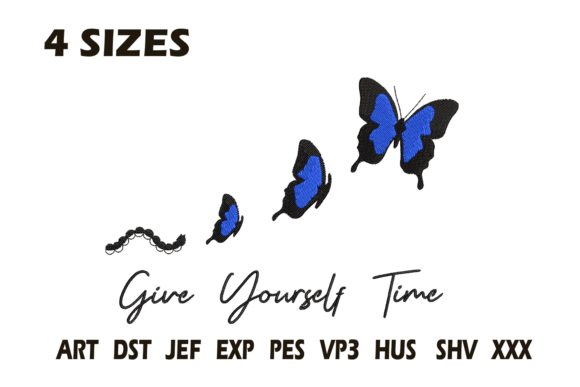
First impression? This isn’t just another butterfly—it’s a quiet, intentional gesture stitched into fabric. Butterfly Give Yourself Time Embroidery lands with soft confidence: rounded wings, gentle curves, and that small but unmistakable phrase woven into the composition like a breath held mid-air. It feels handmade without being fussy—playful but not childish, delicate but not fragile. As a designer who’s stitched hundreds of animal-themed pieces for boutique clients and Etsy sellers, I immediately saw its niche: not as bold statement embroidery, but as a tender accent—something you’d choose for a baby’s onesie, a therapist’s tote bag, or a kitchen towel meant to soften a rushed morning.
Where It Lives Best (and Why)
I tested Butterfly Give Yourself Time Embroidery on a natural linen tea towel and a midweight cotton sweatshirt—both common staples for craft businesses and personalized gift shops. On the towel, the design held clarity without stiffness; the satin stitch wings caught light just enough to feel special, while the lettering remained legible at 3.5 inches wide. On the sweatshirt, it sat cleanly over the chest pocket—no puckering, no thread nesting—thanks to balanced stitch density and thoughtful spacing between elements. That tells me it’s well-structured for real-world custom apparel and small shop product use.
It shines brightest in contexts where emotional resonance matters more than visual dominance: a personalized gift for someone navigating change, a holiday embroidery piece for a new parent, or a botique branding detail on an apron or pillow cover. I’ve seen similar designs fall flat when scaled too large or placed on busy prints—but this one breathes. Its compact layout makes it ideal for embroidered patch conversion or as a subtle corner motif on nursery decor. As an Animals-category machine embroidery design, it avoids cliché by leaning into mood over literalism.
Fabrics That Love It (and Ones That Need Caution)
Cotton, linen, stable knits, and medium-weight home-decor fabrics? Yes—Butterfly Give Yourself Time Embroidery plays well here. The fill stitch areas are generous but not dense, and the running stitch outlines provide definition without overwhelming texture. I used tear-away stabilizer on the towel and cut-away on the sweatshirt—both gave clean results.
Proceed thoughtfully with: stretchy fabrics (like lightweight jersey), ultra-thin voile, heavily textured weaves (burlap, thick terry), and dark fabric backgrounds. Why? The lettering is small and integrated—not outlined or shadowed—so contrast matters. On black fabric, I swapped to a high-sheen white thread and added a layer of water-soluble topping; it worked, but required extra prep. For curved surfaces like caps or toddler hats, confirm the hoop size fits comfortably—this design likely sits best in a 4x4 or 5x7 hoop, and tight curves may compress the phrase slightly. Always run a test on scrap first.
What It Adds to Your Finished Product
This isn’t just decoration—it’s tonal reinforcement. When customers see Butterfly Give Yourself Time Embroidery on a handmade product, they read care, intention, and quiet empathy. That lifts perceived value instantly. For Etsy sellers, it differentiates a generic tote bag from one that feels curated and meaningful. For small business owners building brand consistency, it works as a recurring motif across seasonal collections—think spring tea towels, summer napkins, fall baby blankets—without repeating the same image. And because it’s rooted in a universal sentiment, it avoids trend fatigue better than hyper-seasonal motifs.
That said, don’t force it. It doesn’t belong on aggressive streetwear, athletic gear, or corporate swag. Its strength is in softness—and misplacing it dilutes its impact. A customer buying a “Give Yourself Time” item expects calm, not clutter.
Designer Notes You’ll Actually Use
- Test before you commit: Run Butterfly Give Yourself Time Embroidery on your exact fabric + stabilizer combo—even if it’s the same material you’ve used before. Thread tension shifts matter.
- Check thread color contrast early: The phrase blends easily. Try it in charcoal on oatmeal linen or mint on cream—then verify readability in both daylight and indoor lighting.
- Review stitch density visually: Zoom in on the file preview. Look for any tiny fill areas that might vanish on low-thread-count fabric or bleed on loosely woven textiles.
- Mock it up in context: Drop the design into a printable mockup of your intended product—a sweatshirt front, a pillow cover corner, a tote bag flap. Does it sit comfortably within sightlines? Does it scale naturally next to other elements?
- Confirm licensing scope: If you’re selling finished items or reselling the digital embroidery file, double-check usage rights. Not all Embroidery files permit commercial redistribution or mass production.
- Think beyond stitching: This design translates beautifully to printable packaging labels, social media banners, or even hand-lettered tags—extending its life as a cohesive design asset.
Final Thought: A Design That Earns Its Place
Butterfly Give Yourself Time Embroidery won’t shout. It doesn’t need to. In a market saturated with loud, fast, and flashy, it offers something rarer: space. Space to pause. Space to breathe. Space to make something that feels human—not algorithmic, not automated, not generic. Whether you're stitching a single personalized gift or building a line of mindful handmade products, this design earns its place not through complexity, but through quiet conviction. It reminds us—and our customers—that sometimes the most powerful embroidery isn’t what it says, but how it makes you feel after it’s stitched.